

Service 03 of five
Site preparation for parcel lockers: foundation, power connection, surfacing
Ground assessment, levelling, ground stabilisation, a concrete foundation, block paving and the power connection. On badly prepared ground a locker subsides, and it has to be dismantled and installed again.
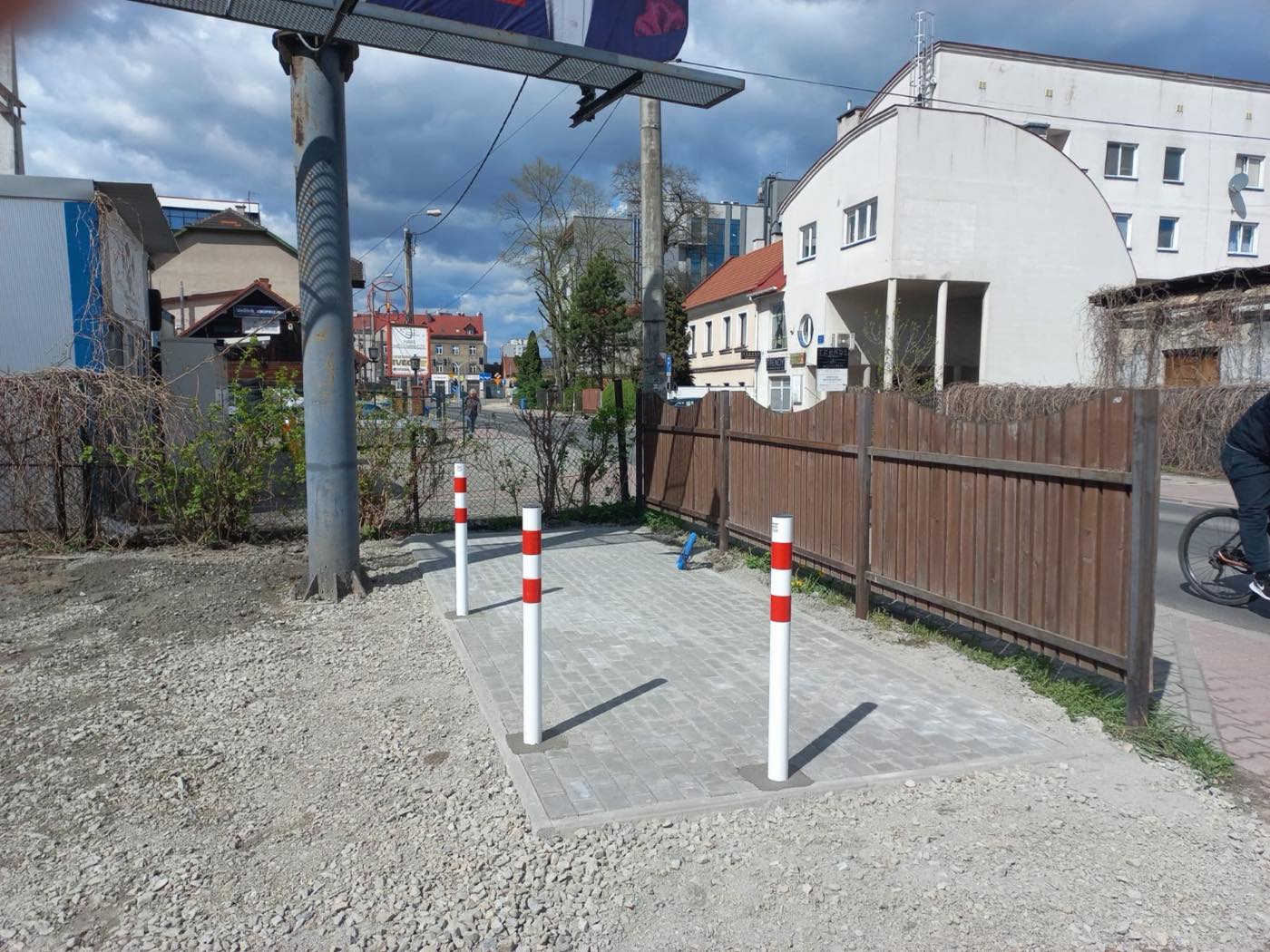
- 57,250m² of block paving laidsince 2019
- 17km of cable laidsince 2019
- 1,533sites preparedsince 2019
- 10construction crewsas of 2026
Process
Six stages of one job
We carry out all six ourselves: you have one contractor accountable for the whole site, from the ground survey to the acceptance test.
Scope of work
- Ground assessment and load-bearing capacity check
- Levelling and grading
- Ground stabilisation
- Concrete foundation for the locker structure
- Block paving around the locker base
- Power supply routing and the power connection
Why we start with the ground
A parcel locker is a structure that stands in one place for years and takes load from the outside every day: doors opening and closing, people leaning on them. The ground underneath moves throughout that time.
That is why the first thing we ask about a new site is the condition of the ground: what lies under the top layer, how water drains away and where power can be brought in from. The answers to these three questions shape the scope of work more than the size of the base does.
What you get after site preparation
- A base ready for installation on the agreed date
- A power connection installed and signed off by a qualified electrician
- Photos from before, during and after the work
- A tidy site with clear access for the vehicle delivering the device
Three questions before we quote
The scope of work follows from the answers to three questions. We ask them before giving a price, so the quote is final.
- What lies under the top layer: made ground, natural soil, old surfacing, buried services
- Where water drains to: whether the base sits where water collects after rain
- Where power can be brought from, and who owns the nearest distribution board
Power connection: who is responsible for what
The line of responsibility runs at the connection point. Bringing power to the point the landowner specifies and connecting the device is our job. The contract with the energy supplier and the connection capacity remain with the site owner.
We put this boundary in the contract. Without it, the site can be ready while the device cannot be switched on, because nobody ordered the power capacity.
Work on the connection itself is done by electricians holding SEP Group 1, item 2 qualifications (the Polish statutory electrical qualification) for equipment and installations up to 1 kV.
When site preparation is not needed
Sometimes a site is ready and needs no work: a hard surface with the right fall, load-bearing ground, a power connection within reach. In that case we go straight to installation.
A site assessment costs little compared with reworking the structure a year later. That is why we offer it even where we expect it to find nothing.
Block paving and drainage
Paving around the base does two jobs: it carries water away from the foundation and gives a level surface to someone approaching the locker with a parcel in both hands. We lay it with a fall away from the device.
Standing water at the base corrodes the housing from below. Nobody looks there when compartment faults are reported, so the damage only shows once it is beyond repair.
Winter work
Pouring concrete below freezing needs a different method and lengthens curing time. It can be done, but it costs more and does not shorten the schedule. If the site is due to open in spring, it is cheaper to plan site preparation for a period when the ground is not frozen.
We raise this when we quote and give you a date that is technically achievable.
What happens when site preparation is done wrong
Poor site preparation for parcel lockers can lead to the structure subsiding, mechanical damage and operating problems. Fixing it afterwards costs a multiple of doing it right the first time, because it involves removing the device, groundworks and installing it again.
Frequently asked questions
Before you ask
- What exactly does site preparation include?
- Ground assessment, levelling, ground stabilisation, a concrete foundation, block paving and the power connection. We hand the site over ready for installation.
- What if the ground cannot bear the load?
- You find out before you invest. The load-bearing test is the first stage, because it decides everything else: foundation depth, sub-base thickness and whether the site makes sense at all.
- Do you also install the power connection?
- Yes, including laying the cable in a protective duct. Work on the connection itself is done by electricians with SEP qualifications.
- When is the best time to call us in?
- Before you sign the agreement for the site. A site survey costs one trip and shows whether the ground is suitable for a locker.
Let us check the site before you sign the contract
A site survey ends with a clear answer on what needs doing and what it costs, including when the answer is “this plot is not suitable”.